


AI and the Crisis of Control

After 50 Years at the Intersection of Technology and Ethics, I Have Something to Say About AI
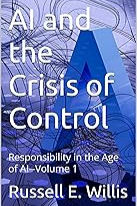
Today, I'm excited to announce the publication of AI and the Crisis of Control: Responsibility in the Age of AI—Volume 1.
From building early digital systems at Texas Instruments to pioneering online education to coaching leaders through strategic challenges, I've watched technology reshape what it means to be human. But AI is different. It doesn't just extend what we can do—it transforms the very structures of decision-making, agency, and accountability.
Here's the problem we're facing:
When an AI system denies someone bail, credit, or employment—who is actually responsible? The engineer who built the model? The executive who deployed it? The vendor who trained it? The answer is usually "everyone and therefore no one."
Traditional accountability assumes clear lines of control. AI systems shatter that assumption. They distribute decisions across teams, vendors, algorithms, and datasets in ways that make pinpointing responsibility nearly impossible.
This book offers a way forward.
Drawing on the research about autonomous technology for my 1990 doctoral dissertation for Emory University, and five decades of practical experience, I've developed frameworks that actually work in real organizations:
→ The ASSUME Model for navigating complexity without pretending to control it → Five operational pillars you can implement Monday morning → Clear guidance on moving from "who's to blame?" to "how do we answer well?"
This isn't academic theory. It's practical architecture for leaders, technologists, and policymakers who know something crucial is at stake but aren't sure how to navigate it responsibly.
Who this is for:
Tech leaders deploying AI at scale
Executives wrestling with governance
Policymakers shaping regulation
Anyone who makes decisions within today's technical systems
The work matters beyond business success—it's about democratic accountability, human dignity, and building futures worth inhabiting.
Volume 1 is available now on Amazon: https://www.amazon.com/AI-Crisis-Control-Responsibility-AI-ebook/dp/B0G5RZRY6H
Volumes 2, 3, and 4 are coming in 2026, diving deeper into Ellul's diagnostic framework, ethical foundations, and theological depth.
After fifty years of building, teaching, and thinking about technology's impact on human life, I'm convinced of this: Responsibility is possible. But only if we build structures adequate to the power we're exercising.
Comments